


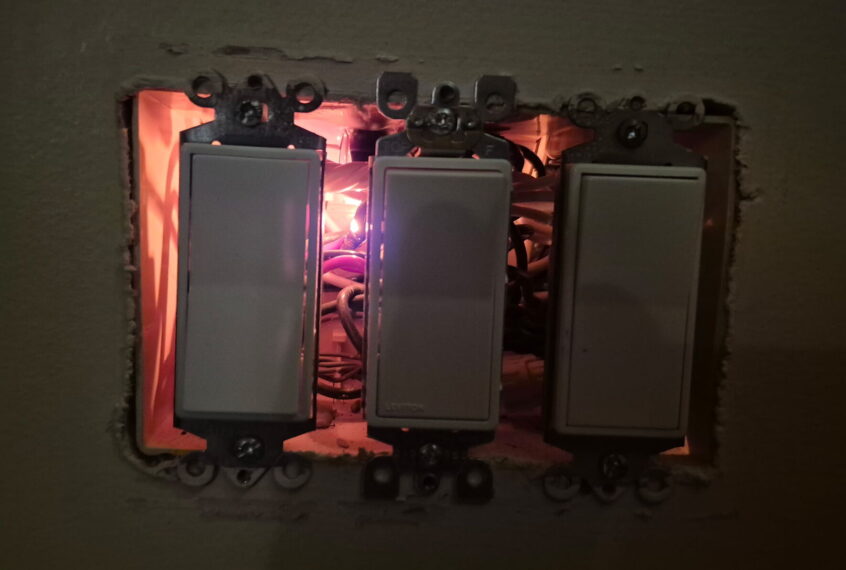
If you ever open your switch or breaker box and notice an orange glow coming from inside, you should take this as a serious warning sign. The presence of electricity shouldn’t create visible light within the walls of your Langley home.
That orange glow is a warning that metal is overheating, which is usually caused by a poor electrical connection in Langley. This means that one or multiple wires are loose, damaged, or not making proper contact. As electricity tries to flow through the damaged connection, it can overheat very quickly, melt wires, burn out switches, and even cause a fire before you even realize what is going on.
By understanding what is happening inside the electrical box, you can better understand why this is such a serious problem that requires fast wiring and outlet services.
What Is Happening Inside a Glowing Electrical Box?
Poor Connections and Electrical Resistance
Inside every outlet, switch, and breaker panel, wires connect to terminals that conduct the electricity through the circuit. If the connections stay tight, power flows smoothly through the circuit. However, when the connections loosen, the electricity has to overcome a resistance to flow through the circuit.
In other words, the electricity then has to push through a small point of contact, generating resistance and heat that keeps increasing as the electricity is conducted through the circuit. The more resistance, the hotter the connection becomes. Over time, that heat damages wires, weakens insulation, and increases fire risk.
Why Does the Wire Start to Glow?
When the metal reaches an extreme high temperature (around 600°C), it starts to glow because of a process called incandescence, just like what happens in old light bulbs when they glow. In a failing or loose electrical connection, the copper wire or connectors get extremely hot, so it starts to glow orange or red. This is a dangerous sign.
Electrical Arcing: Lightning Inside Your Wall
If electrical connections get looser, electricity can jump through the air between two conductors. This jumping of electricity is called electrical arcing, also known as arc flash, like a mini-lightning bolt that creates a hot, bright flash, leading to sparks and hot temperatures that can melt plastic parts, ignite insulation on wires, and set fire.
Why Arc Flash Is Extremely Dangerous
Major Fire Hazard
Arc flash isn’t just an electrical problem; it’s a major electrical fire hazard.
Electrical devices, such as switches, outlets, and breaker boxes, contain plastic pieces and insulation on the wires that begin to melt when exposed to high heat levels. Once their ignition temperature is reached, the structure is at risk, vulnerable.
Electrical fires often begin exactly this way, since wood framing, insulation, and drywall can all catch fire if the heat spreads out of the electrical box.
Hidden Structural Damage
Usually, electrical arcing happens behind the walls, where you can’t see it. In most cases, the first indication of electrical flash is the unusual burning odour, flickering, or buzzing noise coming from the switch or electrical outlet. When you notice it, the wires have already been overheating for a while, and damage may be done.
Total Circuit Failure
If not quickly addressed, the wire will burn completely, and the circuit will no longer work. The light will turn off, or the outlet will lose power. However, a circuit failure isn’t the real danger. The danger happens before the wire even breaks, because of the heat created during this failure, which damages other wiring and structures in the wall.
Common Causes of Poor Electrical Connections
Hazardous electrical connections begin with small installation issues, which tend to worsen over time. The following are some of the most common causes of arc flash, according to licensed electricians in Langley:
- Loose screw terminal, when the wire isn’t tightened firmly under the terminal screw. Over time, this connection becomes even looser, leading to vibration and temperature changes.
- Back-stabbed wiring, meaning wiring connections through holes on the back of some switches and outlets, which weaken over time.
- Bad wire nut connections, involving improper twisting of wires or improper usage of a nut (connector) and leading to resistance.
- Older aluminum wiring, which has a higher rate of expansion and contraction compared to copper wiring. Over time, these repeated movements loosen connections.
Warning Signs of a Dangerous Electrical Connection
Langley homeowners and business owners, in most cases, don’t actually see the wires glowing. They usually experience warning signs before it and avoid risks by addressing the issue quickly.
Some of the signs you should look for include:
- Flickering or dimming lights
- Buzzing or crackling noises coming from outlets or switches
- Warm or discoloured outlet plates
- A burning or fishy plastic smell
- Tripping circuit breakers
- Suddenly inoperative outlets or switches
These signs usually mean that a wire somewhere in a circuit is loose or overheating.
What To Do If You Notice Arc Flash
If you ever notice sparks, glowing wires, or electrical arcing, take action right away:
- First, turn off the main breaker panel. Don’t rely on the wall switch to turn off the electricity, as they’re often still energized even if the switch is in the “off” position.
- Second, don’t touch the outlet, switch, or panel that has been affected by electrical arcing. The electrical components inside are still extremely hot.
- Lastly, call a licensed electrician in Langley to inspect and repair the faulty electrical connection. A technician will stop the electrical arcing and protect your home from a potential electrical fire.
If you notice any of the warning signs mentioned before, contact BPM Electric. Our team can inspect your system and fix unsafe connections before they become a major hazard in your home.

